
Main Content
Department of Electrical & Electronics Engineering
Courses Offered
- UG - B.E-Electrical And Electronics Engineering
- PG - M.E-Power Electronics And Drives
Introduction
The Department of Electrical and Electronics Engineering was established in the year 1993, with the noble aim of imparting technical education to the student community from rural back ground. The UG Programme, having an intake of 60 students and PG programme, Power Electronics and Drives are offered from the year 1993 and 2005 respectively. The department is recognized as a nodal research centre in the year 2007 to carry out Ph.D programme, affiliated to Anna University, Chennai. The UG and PG Programmes are accredited by NBA and NAAC, New Delhi.
The department had produced 100+ university rank holders in both UG & PG including gold medals over these years. Students are placed in reputed electric and software industries and well settled in India and abroad.
The department has undertaken research projects funded by various ministries of Government of India viz, Ministry of Power, Ministry of New & Renewable Energy, Ministry of Science & Technology, All India Council for Technical Education, New Delhi, Tamil Nadu State Council for Science &Technology, Chennai in the area of renewable energy and electric mobility.
Research collaborations are made with renowned organizations and electric utilities in and around India. Few of them are Central Power Research Institute, Bangalore, National Institute of Wind Energy, Chennai, Tata Solar Power, ABB India, Danfoss India, Oracle India, Ashok Leyland Tech Centre, ISGF, IESA and Valeo India etc.
The Department has signed MOU with the Industries like SIMBA, XENDEE, CPRI, Flux Gen, UTL Technologies, Crompton Greaves Ltd - Mumbai, Manasa Green Sun Private Ltd- New Delhi, etc for the projects in renewable energy and electric mobility.
Industrial partnerships with prospective industries are made in collaboration with SICCI, FICCI, ASSOCHAM and CII. Academic connections are realized through professional bodies like IEEE, SAE and ISTE.
Collaborations with International Organizations like ISGAN, ICCT, PSMA, IIASA, NREL, USEA, NASA Power, ESCAP, IRENA, REN21, WORLD BANK, have been established and progress is being made to realize the vision of the department by the year 2025.
Vision
To provide Student Centric Learning Environment so as to produce socially relevant Electrical and Electronics Engineers with technical competence and analytical skills for taking up leadership roles in industries and research organizations.
Mission
- To impart quality education both in theory and practice covering the entire gamut of Electrical and Electronics Engineering (EEE).
- To conduct collaborative research and consultancy work in cutting edge technologies, to meet the global challenges.
- To empower the students to meet the requirements of Electrical and Electronics Engineering sector work and administrative services.
Curriculum & Syllabus
Curriculum & Syllabus
Programme's PEO's, PSO's and PO's
Program Educational Objectives (PEO)
- PEO1: Find employment in Core Electrical and Electronics Engineering and service sectors.
- PEO2: Get elevated to technical lead position and to lead the organization competitively.
- PEO3: Enter into higher studies leading to post-graduate and research degrees.
- PEO4: Become consultant and provide solutions to the practical problems of core organization.
- PEO5: Become an entrepreneur and be part of electrical and electronics product and service industries.
Program Outcomes (POs)
- PO1: Engineering Knowledge: Apply knowledge of mathematics, natural science, computing, engineering fundamentals and an engineering specialization as specified in WK1 to WK4 respectively to develop to the solution of complex engineering problems.
- PO2: Problem Analysis: Identify, formulate, review research literature and analyze complex engineering problems reaching substantiated conclusions with consideration for sustainable development. (WK1 to WK4)
- PO3: Design/Development of Solutions: Design creative solutions for complex engineering problems and design/develop systems/components/processes to meet identified needs with consideration for the public health and safety, whole-life cost, net zero carbon, culture, society and environment as required. (WK5)
- PO4: Conduct Investigations of Complex Problems: Conduct investigations of complex engineering problems using research-based knowledge including design of experiments, modelling, analysis & interpretation of data to provide valid conclusions. (WK8).
- PO5: Engineering Tool Usage: Create, select and apply appropriate techniques, resources and modern engineering & IT tools, including prediction and modelling recognizing their limitations to solve complex engineering problems. (WK2 and WK6)
- PO6: The Engineer and The World: Analyze and evaluate societal and environmental aspects while solving complex engineering problems for its impact on sustainability with reference to economy, health, safety, legal framework, culture and environment. (WK1, WK5, and WK7).
- PO7: Ethics: Apply ethical principles and commit to professional ethics, human values, diversity and inclusion; adhere to national & international laws. (WK9)
- PO8: Individual and Collaborative Team work: Function effectively as an individual, and as a member or leader in diverse/multi-disciplinary teams.
- PO9: Communication: Communicate effectively and inclusively within the engineering community and society at large, such as being able to comprehend and write effective reports and design documentation, make effective presentations considering cultural, language, and learning differences
- PO10: Project Management and Finance: Apply knowledge and understanding of engineering management principles and economic decision-making and apply these to one's own work, as a member and leader in a team, and to manage projects and in multidisciplinary environments.
- PO11: Life-Long Learning: Recognize the need for, and have the preparation and ability for i) independent and life-long learning ii) adaptability to new and emerging technologies and iii) critical thinking in the broadest context of technological change. (WK8)
Program Specific Outcomes (PSOs)
- PSO1: Foundation of Electrical Engineering: Ability to understand the principles and working of electrical components, circuits, systems and control that are forming a part of power generation, transmission, distribution, utilization, conservation and energy saving. Students can assess the power management, auditing, crisis and energy saving aspects.
- PSO2: Foundation of Mathematical Concepts: Ability to apply mathematical methodologies to solve problems related with electrical engineering using appropriate engineering tools and algorithms.
- PSO3: Computing and Research Ability: Ability to use knowledge in various domains to identify research gaps and hence to provide solution which leads to new ideas and innovations.
Faculty
B.E., Electrical and Electronics Engineering
| S.No | Name of the Staff | Designation | Qualification |
|---|---|---|---|
| 1 | Dr. S. Sivakumar | Professor / HOD | M.E., Ph.D. |
| 2 | Dr. S. Priyadharshini | Professor | M.E., Ph.D. |
| 3 | Dr. R. Suresh | Professor | M.E., Ph.D. |
| 4 | Dr. V. Velmurugan | Associate Professor | M.E., Ph.D. |
| 5 | Dr. R. Annadurai | Assistant Professor | M.Tech., Ph.D. |
| 6 | Mrs. V. Bindu | Associate Professor | M.E. |
| 7 | Mrs. A. Parimala | Associate Professor | M.E. |
| 8 | Mr. P. Raja | Assistant Professor | M.E. |
| 9 | Mr. A. Ganeshkumar | Assistant Professor | M.E. |
| 10 | Mrs. S. Nafeeza | Assistant Professor | M.E. |
M.E., Power Electronics and Drives
| S.No | Name of the Staff | Designation | Qualification |
|---|---|---|---|
| 1 | Dr. V. Saravanan | Professor | M.E., Ph.D. |
Facilities
Infrastructure Facilities
- Total Number of Classrooms: 08
- Tutorial Hall: 01
- Seminar Hall: 01
- Laboratories: 08
- Faculty Cabin: 25
Events
Placements
Course Outcomes
Projects
Gallery
Alumni's Feedback
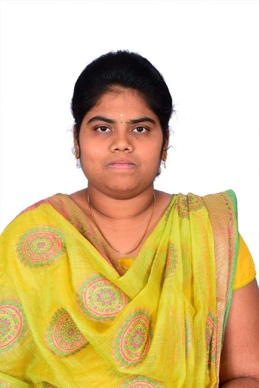
Monica R
Doctoral fellow, Anna University, A. C. Tech.
I am an alumnus of Arunai Engineering College, Tiruvannamalai, pleasure to share this testimonial. The institution provided a disciplined and student-friendly learning environment that strengthened my academic foundation and professional outlook. The well-structured curriculum aligned with industry and research requirements offered strong theoretical knowledge and practical exposure. The faculty members were highly qualified, supportive, and committed to effective teaching and mentoring. Well-equipped laboratories, library facilities, and research support enhanced my learning experience. The college actively promoted seminars, workshops, and co-curricular activities for holistic development which helped me to develop my leadership and organizing skills. Transparent administration and efficient support systems ensured a smooth academic journey. Arunai Engineering College has significantly contributed to my academic growth and career readiness.
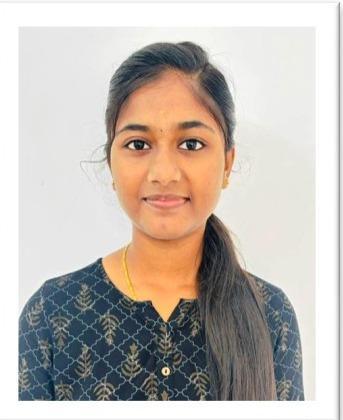
Rakshna S
Executive, Department of MSAT, Biocon Biologics Limited, Bangalore.
I express my sincere gratitude to the Department of Biotechnology at Arunai Engineering College (Batch 2020–2024) for equipping me with a robust academic foundation that has been instrumental in shaping my professional journey.
Currently, I hold the position of an Executive in the Department of MSAT at Biocon Biologics Limited. Having successfully completed six months in this role, I can confidently affirm that the knowledge, hands-on experience, and unwavering support I received during my undergraduate studies were instrumental in helping me secure and excel in this position.
Beyond academics, the department fostered a culture of innovation, critical thinking, and continuous learning, which instilled in me the confidence to adapt to evolving industry standards and challenges. The emphasis on laboratory work, research exposure, and industry-oriented projects played a pivotal role in bridging the gap between classroom learning and real-world application.
I take immense pride in being an alumna of Arunai Engineering College. I will always cherish the role the institution has played in shaping my career.
Sadhana Gunasekaran
Associate Genetic Research Analyst, Histogenetics India PVT. LTD, Chennai.
I would like to express my sincere gratitude to the Department of Biotechnology, Arunai Engineering College, for laying a strong academic foundation that has played a vital role in my professional journey.
I am currently working as an Associate Genetic Research Analyst at Histogenetics India Pvt. Ltd., and having successfully completed one year in this role, I can confidently say that the knowledge, practical exposure, and continuous support I received during my undergraduate studies were instrumental in helping me secure this position.
The department’s well-structured curriculum, dedicated faculty, and emphasis on both theoretical understanding and practical learning equipped me with the skills and confidence required to meet industry standards. I remain deeply thankful to all my professors and mentors for their guidance, encouragement, and unwavering support throughout my academic journey.
I am proud to be an alumna of Arunai Engineering College and will always value the role it has played in shaping my career.

R. Vimalnath
NCAAH, Cochin University of Science and Technology
I take this moment of gratitude towards my professors and seniors heads of BIOTECHNOLOGY department of ARUNAI engineering college for pushing me through boundaries and guiding me the way to proceed further in my academics and gave valuable insights about entrance exams which are apart from B Tech syllabus. I am sincerely thanking the college for the resources, facilities and guidance towards research in this field
Nirmal kumar
Post Doctoral Researcher
The college acts as the platform to improve academic skills and also enhace the extracurricular activities.
S. Annamalai
Junior Manager, central R&D, IFFCO group, Dubai
My college molded me into a complete person and enhanced myself.
Ayyappasamy Suddalaiadum Perumal
Post Doctoral Researcher, McGill University, Canada
I learned how to be confident, perserverance and to listen out the details.